

How to Freeze Meat Properly: A Complete Guide
Table of Contents
- Why Proper Freezing Matters for Meat Quality
- How to Package Meat for Freezing
- Portioning and Separating Meat Before Freezing
- How to Freeze Ground Beef
- How Long Does Meat Last in the Freezer?
- How to Thaw Frozen Meat Safely
- Freezer Temperature, Loading, and Power Outages
- Conclusion
- Frequently Asked Questions
Last Updated: October 18, 2026
Why Proper Freezing Matters for Meat Quality
Learning to freeze meat properly is the difference between a cut that tastes fresh months later and one that turns dry and gray.
The science is simple. Air is the enemy. When air reaches the surface of meat, moisture escapes and ice crystals form.
Here is the key point most guides skip: freezing does not kill bacteria. It only pauses their growth. So meat that goes in fresh and clean comes out fresh and clean.
The USDA Food Safety and Inspection Service guidance on freezing and food safety confirms that freezer storage keeps food safe indefinitely, but quality drops over time.
Get these basics right and your meat holds its flavor, texture, and color until you are ready to cook it. Skip them and you will notice the difference at the first bite.
How to Package Meat for Freezing
The best way to package meat for freezing is to remove air and seal it tight. Air exposure is the top cause of freezer burn. A good wrap blocks it, and a tight seal keeps moisture in.
You have several solid options. Each one works, but they suit different needs. The right choice depends on how long you plan to store the meat, the cut, and how much effort you want to put in.
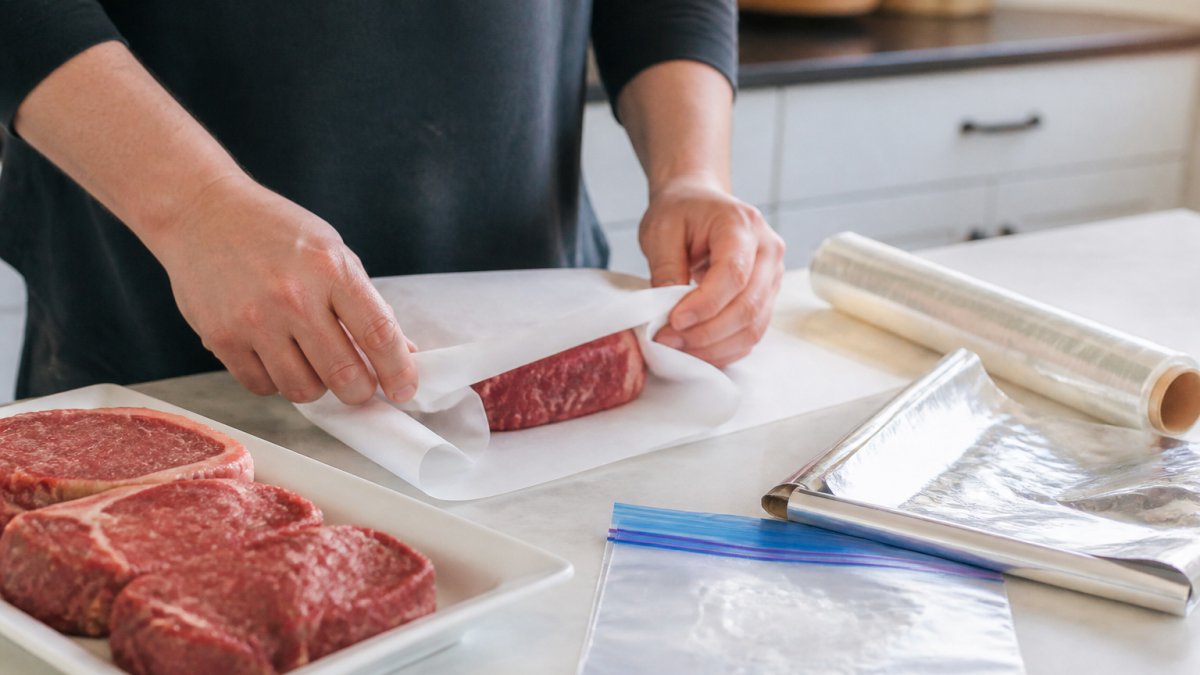
Choosing Freezer-Safe Wrapping and Containers
Pick packaging made for the freezer, not just the fridge. Here is how the common options compare:
| Packaging | Best For | Air Protection | Reusable | Typical Use |
|---|---|---|---|---|
| Freezer paper | Steaks, roasts, large cuts | High | No | Wrap, fold, and tape; plastic coating on one side |
| Vacuum sealing | Long storage, bulk buys | Highest | Bags only | Removes nearly all air; best for cuts held over 6 months |
| Freezer bags | Ground beef, portions | Medium | No | Press out air before sealing; good for flat packs |
| Plastic wrap plus foil | Quick home wrapping | Medium | No | Two-layer approach; plastic first, then foil |
| Rigid containers | Stews, cooked meat | Medium | Yes | Leave headspace for expansion; good for liquids |
Freezer paper has a plastic coating on one side. It is our pick for steaks and roasts because it seals well and peels off cleanly.

Vacuum sealing pulls out nearly all the air. It gives the longest storage life, but the bags cost more.
Freezer bags work well for ground beef and small portions. Press out the air before you seal them. Use bags labeled for freezer use; thin storage bags tear and let air in.
Plastic wrap plus aluminum foil is a solid two-layer approach. Wrap in plastic first, then foil. The plastic holds moisture, and the foil blocks air and light.
Rigid containers suit stews, braises, and cooked meat. Leave an inch of headspace so the contents can expand as they freeze without cracking the lid.
Removing Store Packaging and Wrapping Tightly
Store packaging is built for display, not for long storage. Thin supermarket wrap lets air through over time. So do not trust it for months in the freezer.
When store packaging is adequate: if you will cook the meat within a few weeks, the original tray and wrap can be enough, especially for ground beef and poultry you plan to use soon. For anything you intend to keep longer, overwrap it. Properly protecting your harvest becomes even more critical when you are deboning deer meat in the field to ensure the cuts remain pristine before they reach the freezer.
Follow these steps:
- Take the meat out of the store tray and wrap.
- Pat the surface dry with a paper towel.
- Wrap tightly in plastic wrap, pressing out air bubbles.
- Add a second layer of freezer paper or foil.
- Press the wrap against the meat so no gaps remain.
- Label the package with the date and cut.
The goal is an airtight layer touching the meat on all sides. Any loose fold becomes a pocket where ice builds up.
Matching the Method to the Cut
Not every cut needs the same treatment. A quick guide:
- Steaks and chops: freezer paper or vacuum sealing. Separate each piece with parchment so they do not stick.
- Roasts: freezer paper plus foil, or vacuum sealing for long storage.
- Ground beef: freezer bags, flattened into thin packs.
- Poultry: freezer bags or vacuum sealing; remove giblets first and pat dry.
- Cooked meat and stews: rigid containers with headspace, or freezer bags laid flat.
If you buy in bulk, portion first, then package. Packaging once in meal-size packs saves you from thawing more than you need and from repeated handling that lets air in.
Portioning and Separating Meat Before Freezing
Portion meat into the amounts you actually cook. This one habit saves you from thawing more than you need.
Think in one-pound portions for ground beef and half-pound portions for smaller meals. A household of two will thank you for smaller packs.

For steaks and chops, freeze each piece separately. Lay them on a sheet pan, freeze until firm, then stack and wrap. This keeps them from sticking together.
For slices and patties, place a small square of parchment or wax paper between each one. They will separate easily later, even straight from the freezer.
Label every package. Write the cut and the date on the wrap with a marker. A freezer full of unlabeled foil packets is a guessing game you will lose.
How to Freeze Ground Beef
Ground beef freezes best in flat, thin packages. Flat packs freeze fast, stack neatly, and thaw quickly when you need them.

Here is our method:
- Divide the beef into one-pound portions.
- Place each portion in a freezer bag.
- Flatten the bag with your hand or a rolling pin.
- Press out all the air and seal.
- Label with the date.
- Stack flat in the freezer.
Flattening is the trick most people miss. A thin, flat pack freezes through in hours instead of a full day. Fast freezing means smaller ice crystals, which protects texture.
If you buy in bulk, our 20 lb Ground Beef Stock Up arrives in one-pound packages, ready to portion and freeze. For bigger households, the 40 lb Ground Beef Stock Up keeps the freezer well stocked.
For a steady supply, our Ground Beef subscription delivers every 30, 60, or 90 days. You choose 10 to 30 lb per box, so you never overbuy.
How Long Does Meat Last in the Freezer?
Meat stays safe in the freezer indefinitely, but quality peaks within a set window. The USDA freezer storage chart gives reliable time ranges by meat type. Use these as your guide:
| Meat Type | Best Quality Window |
|---|---|
| Ground beef | 3 to 4 months |
| Fresh steaks and roasts | 4 to 12 months |
| Poultry, whole | Up to 12 months |
| Poultry pieces | Up to 9 months |
| Cooked meat | 2 to 3 months |
Past these windows, meat is still safe to eat. But it may taste drier and lose some texture. For the best flavor, cook within the window and rotate older packages to the front.
How to Thaw Frozen Meat Safely
The safe way to thaw frozen meat is in the refrigerator, never on the counter. Room-temperature thawing lets the outer layer sit in the danger zone, between 40°F and 140°F, while the center stays frozen. Bacteria multiply fastest in that range, and the outer layer can reach unsafe temperatures before the middle thaws.
The refrigerator method takes planning but needs no effort. Put the meat on a plate on the bottom shelf and let it thaw slowly. Small cuts take a few hours. Large roasts may need a full day. A general rule: allow about 24 hours for every 5 pounds of meat.
Three safe methods:
- Refrigerator: slowest, safest, best quality. Keeps meat out of the danger zone the whole time.
- Cold water: seal the meat in a leak-proof bag and submerge in cold water, changing it every 30 minutes. This speeds thawing without letting the surface warm up.
- Microwave: use the defrost setting, then cook right away. Microwave thawing can warm parts of the meat unevenly, so it is not a method for holding meat before cooking.
Once thawed, cook meat within a day or two. Never refreeze raw meat that thawed at room temperature.
When You Can Refreeze Thawed Meat
Refreezing is safe if the meat was thawed in the refrigerator or in cold water. The key is that it stayed out of the danger zone. Meat thawed in the microwave should be cooked before it is refrozen.
Refreezing does cost quality. Each freeze-thaw cycle lets ice crystals grow and moisture escape, so the meat may be drier after the second thaw. If you know you will refreeze, portion before freezing the first time so you thaw only what you need.
A common pattern is to thaw in the fridge overnight, cook what you need, and refreeze the rest only if it was kept cold the whole time. If in doubt, cook it and freeze the cooked meat instead.
Freezer Temperature, Loading, and Power Outages
Set your freezer to 0°F or colder. That temperature stops bacterial growth and keeps ice crystals small. A freezer that runs warmer than 0°F speeds up quality loss.
Check the temperature with a thermometer, not by touch. Place it near the back of the freezer, where it stays coldest.
Load the freezer so cold air can move. Do not pack it so tight that air cannot circulate. Leave a little space between packages.
For power outages, keep the door closed. A full freezer holds its temperature longer than an empty one. If the outage runs long, check the FoodSafety.gov guidance on food safety during power outages before you keep or toss the food.
Conclusion
Freezing meat well takes a few simple habits: wrap it tight, portion it right, keep the freezer cold, and thaw it safely. Do these and your meat tastes fresh months after you bought it.
At 5L Meat Shop, we raise pasture-raised, dry-aged beef and lamb on our Montana ranch and deliver it to your door. Our 100% Grassfed Whole Beef fills a freezer with steaks, roasts, and ground beef, all dry-aged for 14 to 21 days. Every box comes from a family that has ranched for nine generations.
Get started with 5L Meat Shop and stock your freezer with meat you can trust. SHOP ALL BEEF
Frequently Asked Questions
Can you wrap meat in cling film to freeze?
Yes, plastic wrap works as a first layer, but it is not airtight on its own. For best results, wrap the meat tightly in plastic wrap to press out air, then add a second layer of freezer paper, aluminum foil, or a freezer bag. This double layer keeps air exposure low and helps prevent freezer burn during longer storage.
Is it safe to defrost ground beef in water?
Yes, if you use cold water. Keep the ground beef in a sealed, leak-proof bag and submerge it in cold tap water, changing the water every 30 minutes. Never use hot water, which can push the meat into the danger zone between 40°F and 140°F. Cook the beef immediately after thawing this way.
How should you package meat to prevent freezer burn?
Remove store packaging, wrap the meat tightly in plastic wrap, then add a second airtight layer of freezer paper, foil, or a freezer bag. Press out as much air as possible before sealing. Label each package with the cut and date. An airtight layer is the single biggest factor in preventing freezer burn and moisture loss.
How long can meat stay in the freezer?
At 0°F, ground beef keeps its best quality for about 3 to 4 months, steaks and roasts for 4 to 12 months, and poultry for up to 9 months. Meat stays safe indefinitely at 0°F, but flavor and texture decline over time. Use the shorter end of the range for the best eating quality.