
Dry Aged vs Wet Aged Beef Explained: Taste, Cost & Cooking
Table of Contents
- Dry Aged vs Wet Aged Beef Explained: The Core Difference
- How Dry Aging Works: Airflow, Humidity, and the Pellicle
- How Long to Wet Age Beef and How Wet Aging Works
- Dry-Aged Beef Taste, Texture, and Tenderness Compared
- Dry-Aged Beef Cost: Why It Commands a Premium
- Cut-by-Cut Guide: Which Cuts Suit Each Aging Method
- How to Cook Dry-Aged Steak (and Wet-Aged Steak) at Home
- Food Safety and Home-Aging Risks
- Frequently Asked Questions
Last Updated: October 19, 2026
Dry Aged vs Wet Aged Beef Explained: The Core Difference
Dry aged vs wet aged beef explained comes down to one variable: air. Dry aging exposes beef to controlled airflow and humidity so moisture evaporates and flavor concentrates.
The difference shows up on your plate in three places: taste, tenderness, and yield. Dry-aged beef loses weight to evaporation and trimming, which is why it costs more per pound. Wet-aged beef keeps nearly all its weight, so it stays cheaper and milder.
Here is what most guides get wrong: they treat wet aging as the budget option and dry aging as the luxury one. In practice, wet aging is simply the default because almost all supermarket beef is vacuum-sealed and shipped cold, aging quietly in the bag.
| Factor | Dry Aged | Wet Aged |
|---|---|---|
| Environment | Open air, controlled humidity | Vacuum-sealed bag |
| Moisture loss | Significant | Minimal |
| Flavor | Nutty, roasted, concentrated | Beefy, mild, clean |
| Yield | Lower (trimming + evaporation) | Higher |
| Typical aging time | 14-45 days | 7-28 days |
| Cost per pound | Higher | Lower |
How Dry Aging Works: Airflow, Humidity, and the Pellicle
Dry aging works by holding beef at a controlled temperature, typically just above freezing, with steady airflow and managed humidity for weeks.
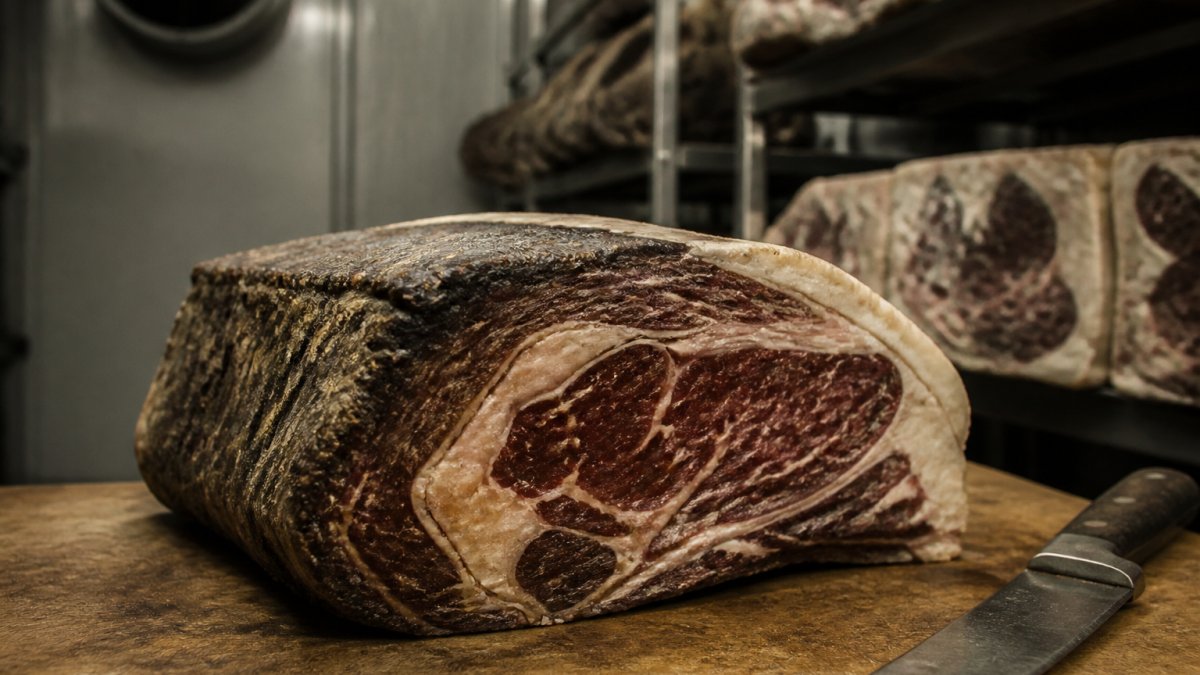
The pellicle is not waste in the flavor sense. It is the protective shell that lets the interior age without spoiling, and it concentrates the beefy flavor underneath. A butcher trims it before the steak reaches you.
Most guides stop there. The useful part is the numbers. Professional dry-aging rooms generally run at 34-38°F (1-3°C), with relative humidity held around 75-85 percent and gentle, continuous air movement across the product.
Aging duration is a producer decision, not a fixed rule.
Temperature control and airflow are the whole game. Too much humidity and the surface stays wet and spoils. Too little and you lose excessive yield to evaporation.
How Long to Wet Age Beef and How Wet Aging Works
Wet aging happens in the bag. Beef is vacuum-sealed while still wet, then held under refrigeration so its natural enzymes tenderize the muscle.
How long to wet age beef depends on the cut and the goal. Shorter windows preserve a clean, beefy flavor. Longer windows increase tenderness but can push toward a slightly metallic or sour note if the bag or temperature fails. The vacuum packaging is doing the work, so a compromised seal ruins the batch.
The appeal is yield. Because nothing evaporates and nothing is trimmed, wet-aged beef keeps its full weight. That is why it dominates supermarket shelves: it is efficient, predictable, and cheap to ship. The trade-off is a milder flavor profile with less of the roasted, nutty character dry aging develops.
Dry-Aged Beef Taste, Texture, and Tenderness Compared
Dry-aged beef taste is nutty, roasted, and concentrated, with a denser texture and a finish that lingers. Wet-aged beef tastes cleaner and more straightforwardly beefy, with a juicier bite.
Dry aging concentrates flavor by removing water. Every bite carries more beef per gram, and the crust contributes savory depth. The texture reads slightly firmer and more steakhouse-like. Wet aging keeps the meat in its own juices, so the texture stays softer and wetter, and the flavor stays mild.
Here is the honest comparison: if you want a steak that tastes like the best steakhouse version of beef, dry aging delivers that. If you want a reliable, juicy, mild steak at a lower price, wet aging is not a compromise, it is the right tool. Tenderness is not the deciding factor.
Dry-Aged Beef Cost: Why It Commands a Premium
Dry-aged beef cost runs higher because you are paying for lost weight, trimmed crust, and weeks of refrigerated storage. A dry-aged primal can lose a meaningful share of its weight to evaporation and trimming before it is ever portioned.
Refrigeration is the other cost driver. Holding beef for weeks in a temperature-controlled room with airflow uses energy and space that wet-aged beef in a vacuum bag does not require. The cold chain, the monitoring, and the labor of trimming all add up.
Our dry-aged steaks reflect that reality. A Filet Mignon is $16.00, a New York Strip is $24.00, a Rib Steak is $27.00, and a Porterhouse Steak is $35.00. Those prices buy dry-aged beef from pasture-raised cattle, not the vacuum-sealed default.
Cut-by-Cut Guide: Which Cuts Suit Each Aging Method
Fatty, well-marbled cuts reward dry aging best. Lean cuts like filet mignon dry age well too, but the effect is subtler because there is less fat to amplify.
The more useful question is not which cuts can be dry aged but which cuts are worth dry aging, and for how long. Here is how the major cuts typically respond.
Meat Club - Boneless Premium Steaks →
- Ribeye and rib steak: The benchmark dry-aging cut. Marbling and fat carry the concentrated flavor, and the natural richness balances the firmer texture. A 21-35 day window is a common sweet spot; longer pushes the nutty notes harder. Cook it like a steakhouse would: hard sear, finish to medium-rare, rest.
- Strip loin and New York strip: Excellent for dry aging. Firm texture and rich beef flavor mean the cut holds up well at 28-45 days. Because the strip is leaner than ribeye, keep the seasoning simple and avoid overcooking, which exaggerates dryness.
- Porterhouse: Great for dry aging. Two cuts, one bone, plenty of fat. The strip side and tenderloin side age differently on the same steak, so pull it at medium-rare and let the rest carry the difference.
- Filet mignon: Good for dry aging, though the lean profile means subtler gains. A shorter 14-21 day window preserves the tender, mild character people buy filet for; long aging can make it read dry. Wet aging is a perfectly defensible choice here if tenderness is the priority.
- Chuck and round roasts: Either method. Dry aging adds flavor depth that suits slow cooking, and the enzymatic tenderization helps tougher cuts. Braise or roast low and slow; the concentrated flavor stands up to long cook times better than a mild wet-aged roast.
- Ground beef: Dry-aged trim makes a noticeably richer burger. Because the fat is already aged and flavorful, do not overwork the patty and cook it to a safe internal temperature rather than chasing a crust at the expense of doneness.
A practical rule: the more marbling a cut has, the more it benefits from dry aging and the longer it can typically go. Lean cuts gain less and risk more, so shorter windows or wet aging are the safer calls.
Our 80/20 Ground Beef at $11.00 shows what dry-aged trim does for a simple burger. Our Beef Roast at $34.00 is built for the oven or slow cooker, where dry-aged flavor has time to develop.

How to Cook Dry-Aged Steak (and Wet-Aged Steak) at Home
How to cook dry-aged steak: pat it dry, salt it, and sear it hard over high heat to build a crust, then finish to your target temperature and rest it. The concentrated flavor needs little else.
Start with a dry surface. Moisture is the enemy of a crust, and dry-aged beef is already drier on the surface than wet-aged. Get your pan or grill properly hot before the meat goes on, and do not move it around. Let the crust form.
For wet-aged steaks, the meat is juicier and milder, so a little more salt and a hard sear do the heavy lifting. Rest both types for several minutes before slicing so the juices redistribute. Serve dry-aged beef on the rarer side of your preference, where the concentrated flavor reads clearest.
Food Safety and Home-Aging Risks
Home dry aging is where most people get into trouble. Dry aging requires precise temperature control, controlled humidity, and steady airflow, and a household refrigerator rarely delivers all three consistently.
The core risks are temperature swings, poor airflow, and contamination on the surface. Wet aging is more forgiving because the vacuum seal protects the meat, but a broken seal or a refrigerator that runs too warm can still spoil the batch.
Our advice is blunt: buy dry-aged beef from a producer who ages it correctly rather than experimenting at home. For storage, keep vacuum-sealed cuts cold and use them within a reasonable window, and follow USDA food safety guidance on refrigeration and storage for safe holding temperatures.
If you want the convenience of dry-aged beef without the guesswork, our Meat Club - Boneless Premium Steaks at $35.00 delivers a rotating mix of dry-aged boneless steaks every 30, 60, or 90 days. The Meat Club - Bone in Premium Steaks at $30.00 gives you thick-cut, dry-aged steaks with the bone in.


Choosing between dry-aged and wet-aged beef is really a choice about what you want on the plate: concentrated, nutty depth or clean, juicy simplicity. Both are legitimate, and the right answer depends on the cut, the dish, and your budget.
At 5L Meat Shop, we dry age our pasture-raised beef because it delivers the flavor our family has spent nine generations learning to raise.
Frequently Asked Questions
Is dry-aged beef really better than wet-aged?
It depends on what you value. Dry aging concentrates flavor and creates a nutty, roasted taste, but it also costs more because of moisture loss and trimming. Wet-aged beef is milder, juicier, and more affordable. For a special steak dinner, many cooks prefer dry-aged; for everyday meals, wet-aged is a solid choice.
How long does it take for wet-aged steak to age?
Wet aging typically takes 7 to 28 days in vacuum-sealed packaging under refrigeration. Most supermarket beef is wet-aged for about 14 days. You can wet age longer, but the flavor changes are subtle compared to dry aging. The key is consistent temperature control, usually between 32°F and 36°F.
Does dry-aged beef taste different from wet-aged beef?
Yes. Dry-aged beef develops a concentrated, beefy flavor with nutty and roasted notes, while wet-aged beef tastes cleaner and more metallic or iron-like. The dry-aged beef taste comes from enzymatic breakdown and moisture loss during air exposure. Some people love it, others find it too intense.
Why does dry-aged beef cost more?
Dry-aged beef cost is higher because of weight loss from evaporation (often 10-20%) and the need to trim the crust (pellicle) before cooking. It also ties up inventory for weeks in temperature-controlled rooms. Those factors add up to a price premium of roughly 20-50% over wet-aged beef.
How should you cook dry-aged beef?
Cook dry-aged steak like any premium steak: season simply with salt and pepper, sear over high heat, and finish to medium-rare (130-135°F). Because dry-aged beef has less moisture, avoid overcooking. Let it rest for 5-10 minutes before slicing. Grilling or cast-iron searing both work well.
Which is more tender, dry-aged or wet-aged beef?
Both can be tender, but they get there differently. Wet aging keeps moisture in, so the steak feels juicier. Dry aging breaks down connective tissue through enzymes, which can make the meat more tender in a firmer, denser way. The cut matters more than the aging method for overall tenderness.
Is wet aging worth it?
For most home cooks, yes. Wet aging is what already happens to vacuum-sealed beef during refrigerated storage, and it improves tenderness without added cost. It's not a specialty process you need to seek out, but it explains why supermarket beef is often reasonably tender.
Can I dry age beef at home safely?
Home dry aging carries risks. You need a dedicated refrigerator with steady temperature (34-38°F), humidity control (around 75-85%), and airflow. Without those conditions, harmful bacteria can grow. For most households, buying professionally dry-aged beef is safer and more consistent than attempting it at home.