
How to Verify Grass Fed Beef: A Step-by-Step Guide
Table of Contents
- Why Verifying Grass Fed Beef Takes More Than a Label
- Grass-Fed Beef Labeling: What USDA Claims Actually Mean
- Grass-Fed vs. Grass-Finished Beef: Why the Difference Matters
- Grass-Fed Beef Certification: Third-Party Proof You Can Check
- A Step-by-Step Checklist to Verify Grass Fed Beef
- Questions to Ask When Buying Grass-Fed Beef
- What Visual and Taste Clues Can and Cannot Prove
- Conclusion
- Frequently Asked Questions
Last Updated: October 21, 2026
Why Verifying Grass Fed Beef Takes More Than a Label
Learning how to verify grass fed beef starts with one hard truth: a package label is a claim, not proof. At 5L Meat Shop, we've spent nine generations raising cattle, and we still tell customers to ask questions before they buy. That's the honest way to shop.
Here's the problem. "Grass-fed" is one of the most loosely used phrases in the meat aisle. Some packages carry a real certification. Others carry a marketing slogan. The two look almost identical on the shelf.
So how do you tell them apart? You check the paperwork, ask the producer, and know what the words actually mean. Below, we'll walk through a checklist you can use at any counter or online store.
Grass-Fed Beef Labeling: What USDA Claims Actually Mean
A "grass-fed" claim on a USDA-inspected label describes what the animal ate, but the rules behind that claim vary by program. Some claims are reviewed by the USDA's Food Safety and Inspection Service (FSIS). Others rely on a third-party certifier. The label alone rarely tells you which.
The USDA FSIS reviews label claims for truth and accuracy before a product hits the market. You can read more in the USDA FSIS labeling guidance. That review is a real safeguard, but it confirms the claim is accurate. It does not always mean an inspector visited the pasture.
The USDA FSIS Label Approval Process
Label approval is a paperwork step, not a farm inspection. A producer submits a label claim, and FSIS checks that it's truthful and not misleading. For some claims, the producer must attach a signed statement or supporting documentation.
That's the key distinction. Approval means the claim passed review. It doesn't mean someone counted every blade of grass. So when you verify grass fed beef, you're checking two things: that the claim was reviewed, and that someone actually confirmed the feeding practice.
Grass-Fed vs. Grass-Finished Beef: Why the Difference Matters
Grass-finished beef comes from cattle that ate grass and forage their entire lives, including the final finishing period. Grass-fed beef can mean the animal ate grass for most of its life but received grain during finishing. The distinction changes what's on your plate.
This is where most shoppers get confused. A "grass-fed" label may allow a grain finishing phase. A "grass-finished" or "100% grass-fed" label means no grain at any point.
- Grass-fed: grass diet, possibly grain-finished
- Grass-finished: grass diet through the end, no grain finish
- 100% grass-fed: the strictest version, grass and forage only
If your goal is truly pasture-raised beef with no grain, ask for "grass-finished" or "100% grass-fed." Anything vaguer deserves a follow-up question.
Grass-Fed Beef Certification: Third-Party Proof You Can Check
Third-party certification is the strongest paper trail you can ask for. An independent certifier audits the ranch against a written standard, then lets the producer use its seal. That seal is your shortcut to a verified claim.
Here's what to look for on the package:
- A certification program seal with a recognizable name
- A certificate number or producer ID you can look up
- A signed statement from the producer on file with the certifier
- Clear language on whether the standard is grass-fed or grass-finished
Certification programs differ in strictness. Some allow supplemental feed; others forbid grain entirely. The point isn't which seal is "best." It's that a seal gives you documentation you can actually check, rather than a claim you have to take on faith. Transparency in labeling extends beyond livestock management, as verifying organic certifications provides a similar framework for assessing the integrity of other agricultural products.
A Step-by-Step Checklist to Verify Grass Fed Beef
Use this checklist whether you're at a farmers market, a butcher counter, or ordering online. It takes about two minutes and separates documented proof from marketing talk. The goal is not to find the most impressive label, it is to find the shortest path from a package to a record you can actually check.
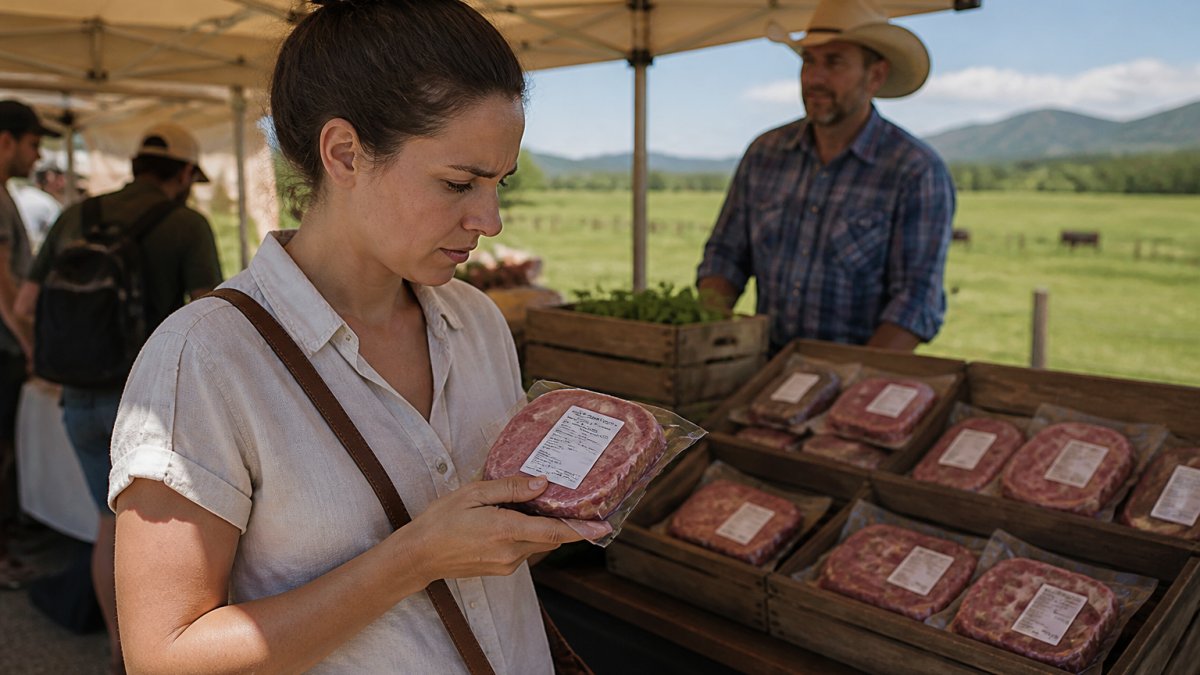
- Read the exact wording. Note whether it says "grass-fed," "grass-finished," or "100% grass-fed." Each means something different, and the strictest claim is the one that rules out grain at any point.
- Look for a certification seal. No seal means the claim rests on the producer's word alone. A seal is not proof by itself, but it is the starting point for a paper trail.
- Write down the certifier's name and any certificate or producer ID. This is the single most useful piece of information on the package. Without it, you have nothing to look up.
- Check the certifier's public directory or records. Most certification programs publish a searchable list of certified producers or a way to request verification. Confirm the farm or brand appears and that the certification is current, not expired.
- Confirm the standard covers feeding practices. A program that certifies animal welfare or pasture access is not the same as one that certifies a grass-only diet through finishing. Read the standard's scope, not just its logo.
- Ask for the signed statement or certificate. For USDA-reviewed claims, the producer may hold a signed affidavit or supporting documentation on file. Ask to see it or a copy.
- Confirm the supply chain. Ask where the cattle were raised and finished. A single ranch is easier to trace than a blend of sources, and a blend makes it harder to match the package to a specific record.
- Check the cut and the label together. The package label should match what the seller told you. A mismatch between the counter talk and the printed claim is a red flag.
What a valid record looks like
A checkable record usually has four parts: the certifier's name, the standard the farm was audited against, the producer's name or ID, and a current status. If any of those is missing, you are back to trusting a claim. A common pattern is a seal on the package but no certifier name on the label, in that case, ask the seller for the certifier before you buy.
When the seller cannot produce documentation
If no one can name the certifier, show a certificate, or point you to a directory listing, treat the claim as unverified. That does not automatically mean the beef is not grass-fed. It means you have no way to confirm it, and you should decide whether the price and the seller's reputation are enough for you. For a repeat purchase, the absence of a record is a reason to keep asking or to buy elsewhere.
Questions to Ask When Buying Grass-Fed Beef
The right questions do more than any label. Ask them directly, and listen for specific answers. Vague replies are a red flag.
- "Is this grass-fed or grass-finished?"
- "Which certification program covers this beef?"
- "Can I see the signed statement or certificate?"
- "Where were the cattle raised and finished?"
- "Was any grain used during finishing?"
- "How is the beef aged, and for how long?"
A producer who raises their own cattle will answer these easily. A reseller who blends sources may not. That difference tells you a lot.
What Visual and Taste Clues Can and Cannot Prove
Color and flavor can hint at how beef was raised, but they can't prove it. Dark red meat and yellow fat are often linked to grass feeding, yet both vary by breed, age, and diet. They are clues, not evidence.
Here's what these signals can and cannot do:
| Clue | What It Suggests | What It Cannot Prove |
|---|---|---|
| Dark red meat color | Grass-finished diet is possible | The feeding program |
| Yellow fat | Forage-heavy diet is likely | Certification status |
| Deep, beefy flavor | Slower growth, more age | Whether grain was used |
| Firm marbling | Good finishing | Grass-only feeding |
Taste and appearance are worth noticing. But when you verify grass fed beef, the paperwork is what settles the question. Use your eyes and palate as a starting point, then confirm with records.
Conclusion
The real challenge isn't finding beef labeled grass-fed. It's finding beef you can actually prove was raised that way. Labels help, but documentation, certification, and straight answers from the producer are what close the gap.
That's the standard we hold ourselves to at 5L Meat Shop. Our 100% grass-fed beef comes from cattle raised on our Montana ranch, dry-aged for 14 to 21 days, with no grain. You can start with our 100% Grassfed Quarter Beef at $11.40 per lb, or go bigger with a half beef or whole beef. Every order comes with a real ranch behind it, not just a word on a label.


Shop with a producer who answers your questions. Get started with 5L Meat Shop and know exactly where your beef comes from.
Frequently Asked Questions
What should I ask a rancher or butcher to verify grass-fed beef?
Ask how the cattle were raised and finished, whether they ate grain at any point, and what the animals ate in winter. Request the name of the certification program if one is claimed and ask to see the certificate. Ask whether the farm is the producer or a reseller, and where the cattle were born and raised. A producer who raises the animals can answer these directly. Vague answers or a refusal to name a certifier are a signal to look elsewhere.
Are grass-fed beef labels or certifications proof of how cattle were raised?
A label claim alone is not proof. USDA FSIS requires label claims to be truthful and not misleading, and producers must submit documentation such as signed statements to support a grass-fed claim. That is a starting point, not a guarantee. Third-party certification programs add independent audits, but the strength of each program varies. Treat labels as one piece of evidence and combine them with certification records and direct questions to the producer.
How can you tell whether beef is grass-fed or grain-fed?
You cannot reliably tell by looking at the meat. Color, fat color, and marbling vary with breed, age, diet, and aging, so a dark red steak or yellow fat does not prove a grass diet. Taste is also subjective and influenced by dry-aging and cooking. The reliable route is documentation: check the package label, confirm any certification, and ask the producer how the animal was finished. Visual clues are useful for judging freshness, not feeding history.
Does grass-fed beef have to be grass-finished?
No. A grass-fed claim can apply to cattle that ate grass for most of their lives but received grain during the finishing period. Grass-finished means the animal stayed on forage through finishing, with no grain. 100% grass-fed is a stricter claim that usually means grass and forage only, start to finish. Read the exact wording on the package and ask the producer which definition they use, because the terms are not interchangeable.