
Is Grass-Fed Beef Worth the Price? A Honest Breakdown
Last Updated: October 23, 2026
Quick Summary
Is grass fed beef worth the price depends on your priorities. If you eat beef regularly, value flavor and quality, and buy in bulk, grass-fed beef at $11.40 per pound becomes reasonable when spread across multiple meals. The premium is harder to justify if you eat beef infrequently, have budget constraints, or lack freezer space.
- Grass-fed beef costs approximately $11.40 per pound, with a quarter beef running $1,254-$1,368 for 110-120 pounds.
- Bulk purchases lower per-pound costs slightly, with whole beef at $10.96 per pound versus quarter beef at $11.40 per pound.
- Grass-fed beef has richer, more complex flavor and requires shorter cooking times due to lower fat content.
- Nutritional differences like higher omega-3s and CLA exist but are modest and most meaningful when combined with other dietary choices.
- Verify grass-fed claims by asking sellers what cattle ate, for how long, and whether they can trace beef to a specific ranch.
Table of Contents
- Grass-Fed vs. Grain-Fed Beef: What the Price Difference Really Covers
- Grass-Fed Beef Price Per Pound: Breaking Down the Real Cost
- Nutritional Differences: Separating Hype from Evidence
- How to Verify Grass-Fed Beef and Avoid Misleading Labels
- Taste, Flavor, and Cooking: Does Grass-Fed Beef Cook Differently?
- Is the Premium Worth It? A Practical Decision Framework
- Frequently Asked Questions
Grass-Fed vs. Grain-Fed Beef: What the Price Difference Really Covers
When you're deciding if grass fed beef is worth the price, the first thing to understand is what you're actually paying for. The difference between grass-fed and grain-fed beef isn't just marketing, it reflects fundamentally different ways of raising cattle, and those differences show up in your costs.
Grass-fed cattle spend their lives on pasture, eating forage and hay. Grain-fed cattle eat grass early on, then move to feedlots where they're finished on grain for the last 100-110 days before processing. This finishing period is the key cost driver. Grain is cheaper than maintaining pasture systems, which is why grain-finished beef costs less at the supermarket.
But here's what most people miss: the real price gap comes down to scale and efficiency. Large industrial operations can spread their costs across thousands of animals. A smaller operation raising grass-fed cattle on pasture has higher land costs, lower animal density, and longer production cycles.
At 5L Meat Shop, our grass-fed cattle eat Montana-grown hay and pasture from our ranch with no grain. That commitment to 100% grass-feeding means higher operational costs than grain-finishing, and that cost difference flows directly to you. Understanding what you're paying for helps you decide whether the premium aligns with your priorities.

Grass-Fed Beef Price Per Pound: Breaking Down the Real Cost
The most practical way to evaluate whether grass-fed beef is worth the price is to look at actual per-pound costs, not sticker shock on a whole animal.
Our 100% grass-fed beef runs approximately $11.40 per pound at 5L Meat Shop. That translates to roughly $1,254-$1,368 for a quarter beef (110-120 pounds), $2,676-$2,899 for a half beef (240-260 pounds), and $5,260-$5,480 for a whole beef (480-500 pounds). These are deposit-based orders where you pay $200 upfront, then settle the balance based on actual weight after processing.

The per-pound cost matters because it's how you compare across different purchase sizes and different sources. A quarter beef at $11.40 per pound is the same per-pound value as a half beef at $11.15 per pound or a whole beef at $10.96 per pound, the larger the purchase, the slightly lower per-pound cost.
What you won't see in that per-pound figure is the value locked inside. It's also dry-aged for 14-21 days at 5L Meat Shop, which concentrates flavor and improves tenderness. When you factor in the actual usable meat yield and the quality of cuts you receive, the effective cost per meal often compresses compared to supermarket beef.
How Bulk Purchases Lower Your Per-Pound Cost
The most effective way to make grass-fed beef fit your budget is to buy in bulk. This isn't just about getting a lower per-pound price, it's about spreading your investment across time.
A quarter beef from 5L Meat Shop (approximately 110-120 pounds) gives you a mix of steaks, roasts, ground beef, and specialty cuts. The upfront cost feels significant, but amortized across those meals, the per-serving cost becomes much more reasonable.
Here's the practical math: A grain-finished steak at the supermarket might cost $12-$15 per pound, which works out to $18-$22 for a single meal. The grass-fed option isn't dramatically more expensive when you view it across multiple meals.
Bulk buying also means you're not paying the markup that retail stores add. Supermarket beef includes transportation, storage, display, and retail overhead. Direct purchase from 5L Meat Shop eliminates those middlemen costs, which offsets some of the premium you're paying for grass-fed production. Understanding these logistical savings provides a clearer perspective on the broader factors behind beef costs that influence the price of premium varieties.
| Purchase Size | Per-Pound Cost | Estimated Total Price | Meals for Family of 4 |
|---|---|---|---|
| Quarter Beef (100% Grass-Fed) | $11.40 | $1,254-$1,368 | 40-50 |
| Half Beef (100% Grass-Fed) | $11.15 | $2,676-$2,899 | 90-110 |
| Whole Beef (100% Grass-Fed) | $10.96 | $5,260-$5,480 | 180-220 |
Nutritional Differences: Separating Hype from Evidence
The nutritional argument for grass-fed beef is real, but it's more nuanced than marketing claims suggest. Grass-fed cattle do produce beef with a different nutritional profile than grain-fed cattle, but the differences are smaller than some advocates claim.
Grass-fed beef tends to be leaner, which means less total fat but also less marbling, the intramuscular fat that creates flavor and tenderness.
The honest take: these nutritional differences exist, but they're not transformative. If you're eating a reasonably balanced diet, the gap between grass-fed and grain-fed beef won't be the deciding factor in your health outcomes. Where the nutritional case for grass-fed beef gets stronger is when you're looking at overall diet quality, food sourcing, and the cumulative effect of choosing higher-quality protein sources across all your meals.
Omega-3 Fatty Acids and the Omega-6 Ratio
The practical significance: if you're intentional about your omega-3 intake and you're already eating fish, nuts, and seeds, the omega-3 boost from grass-fed beef is a meaningful addition rather than a primary source. If you eat beef regularly and you're not consuming other omega-3 sources, grass-fed beef becomes a more important contributor to your overall omega-3 intake.
Conjugated Linoleic Acid (CLA) and Other Compounds
Conjugated linoleic acid is a fatty acid found in ruminant meat and dairy (pubmed.ncbi.nlm.nih.gov). Grass-fed beef also tends to have higher levels of fat-soluble vitamins like vitamin A (in the form of beta-carotene) and vitamin E compared to grain-fed beef.
Again, these differences are real but modest. You're not going to feel dramatically different eating grass-fed beef, but if you're already prioritizing nutrient density in your diet, grass-fed beef aligns with that philosophy. The nutritional case for grass-fed beef is strongest when combined with other dietary choices, whole foods, minimal processing, diverse protein sources, rather than as a standalone fix.
How to Verify Grass-Fed Beef and Avoid Misleading Labels
This is where the rubber meets the road. The term "grass-fed" isn't always what it seems, and misleading labels are common enough that you need to know what to look for.
The USDA defines "grass-fed" as cattle that have eaten only grass and forage throughout their lives, with no grain. That's the strictest definition. But you'll also see terms like "grass-finished," which means cattle ate grain early in life but finished on grass. "Pasture-raised" can mean almost anything, it might mean cattle had outdoor access but were still primarily grain-fed. "Natural" tells you almost nothing about how the cattle were raised.
At 5L Meat Shop, we're transparent about what you're getting. Our 100% grass-fed beef means our cattle eat grass and Montana-grown hay from our ranch with no grain at any point. Our grain-finished beef means pasture-raised cattle that received grain during the last 100-110 days before processing. That clarity matters because it tells you exactly what you're buying.
When you're evaluating grass-fed beef from any source, ask these questions: What did the cattle eat? For how long? What's the verification process? Can you trace the beef back to a specific ranch or producer? If a seller can't answer those questions clearly, that's a red flag. Real transparency means specific answers, not vague marketing language.
Taste, Flavor, and Cooking: Does Grass-Fed Beef Cook Differently?
Here's where grass-fed beef shows up most directly in your kitchen. Grass-fed beef tastes different, cooks differently, and requires slightly different technique than grain-fed beef.
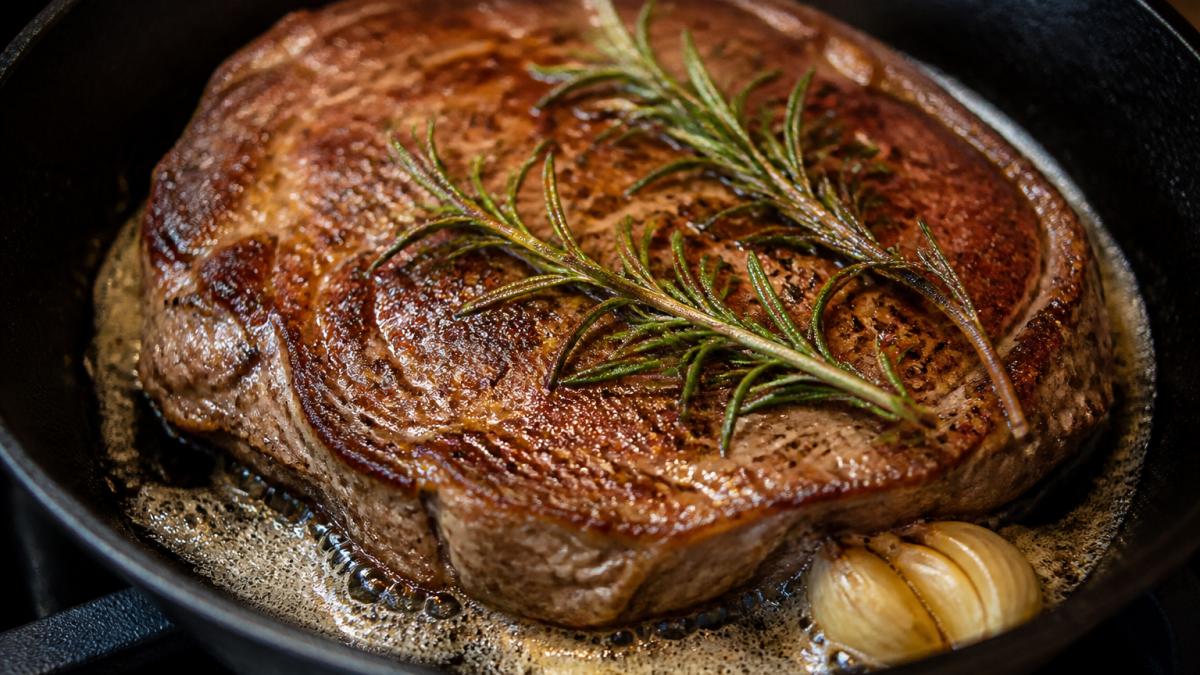
Grass-fed beef has a richer, more complex flavor than grain-fed beef. Some people describe it as "beefier" or more mineral-forward. That flavor comes from the cattle's diet, grass and forage create compounds that grain doesn't.
The texture is leaner because grass-fed cattle produce less intramuscular fat. Less marbling means the meat can dry out more easily if you overcook it. High heat and shorter cooking times work better for grass-fed steaks.
Ground grass-fed beef requires different handling. It's leaner, so burgers and meatballs can feel drier if you're not careful. Mix in a little fat (butter or olive oil), don't overwork the meat, and cook to medium rather than well-done.
The dry-aging process that 5L Meat Shop uses (14-21 days) also affects how the meat cooks. Dry-aged beef has more concentrated flavor and better tenderness because enzymes break down muscle fibers during aging.
Is the Premium Worth It? A Practical Decision Framework
So is grass fed beef worth the price? This is the question that matters. After understanding the price, the nutrition, and the taste, you need to decide whether grass-fed beef makes sense for your situation.
The premium is worth it if:
- You eat beef regularly (multiple times per week) and you're willing to buy in bulk to spread the cost
- Flavor and quality matter to you more than hitting the lowest possible price
- You value knowing where your food comes from and supporting smaller producers
- You're already prioritizing nutrient density in your diet through other food choices
- You have adequate freezer space to store a quarter, half, or whole beef
The premium might not be worth it if:

- You eat beef infrequently and prefer flexibility to buy individual cuts
- You're on a tight budget and every dollar counts
- You don't have freezer space for bulk purchases
- Taste differences don't matter enough to justify the cost difference
- You're looking for a single food change to dramatically improve your health
A middle ground exists: buy grass-fed beef for cuts where you'll taste the difference (steaks, ground beef for burgers) and grain-finished beef for dishes where the difference is minimal (stews, soups, ground beef for tacos with strong spices). This approach lets you experience grass-fed beef without committing to the full premium on every purchase.
For families ready to commit, bulk purchases from 5L Meat Shop make the math work. A quarter beef at $11.40 per pound spreads the cost across months of meals. You're not paying a premium on every individual steak, you're making a quarterly investment in higher-quality protein. That's a different decision than paying $18-$20 per pound at a supermarket for individual grass-fed steaks.
Deciding whether grass-fed beef is worth the price comes down to your priorities and your willingness to buy differently. If you value quality, flavor, and knowing exactly where your food comes from, grass-fed beef from 5L Meat Shop delivers on all three. Our 100% grass-fed and grass-fed grain-finished beef is dry-aged for 14-21 days, giving you rich flavor and reliable tenderness.
Frequently Asked Questions
Is grass-fed beef really healthier than grain-fed beef?
However, the differences are modest, you won't see dramatic health transformations from switching. If health is your main concern, the nutritional gap is smaller than marketing suggests, so cost and taste preferences matter equally.
How much does grass-fed beef cost per pound compared to grain-fed?
At 5L Meat Shop, grass-fed beef runs $10.96-$11.40 per pound depending on the cut size. Buying in bulk (a half or whole cow) lowers the per-pound cost slightly compared to quarter purchases, making larger orders more economical for freezer-stocking households.
How can I tell if beef is truly grass-fed and not just labeled that way?
Ask your supplier directly about their cattle's diet and farming practices. Direct-from-ranch sources like 5L Meat Shop can show you their operation and explain their feeding practices, which offers transparency that supermarket labels cannot.
Does grass-fed beef cook differently than grain-fed beef?
Yes. Grass-fed beef is typically leaner with less marbling, so it cooks faster and can dry out if overcooked. Cook it to medium-rare (130-135°F internal temperature) rather than medium or beyond. Use lower heat, add fat (butter or oil), and avoid prolonged cooking. Ground grass-fed beef works well in burgers and sauces where added fat compensates for leanness. Grain-fed beef's higher fat content gives you more forgiveness with cooking time.
